
Gathaithi FCS · Gallery
A walk through the society
Ten stops around the society, from the entrance to the people who run it. All photographs were taken at Gathaithi.
Walk in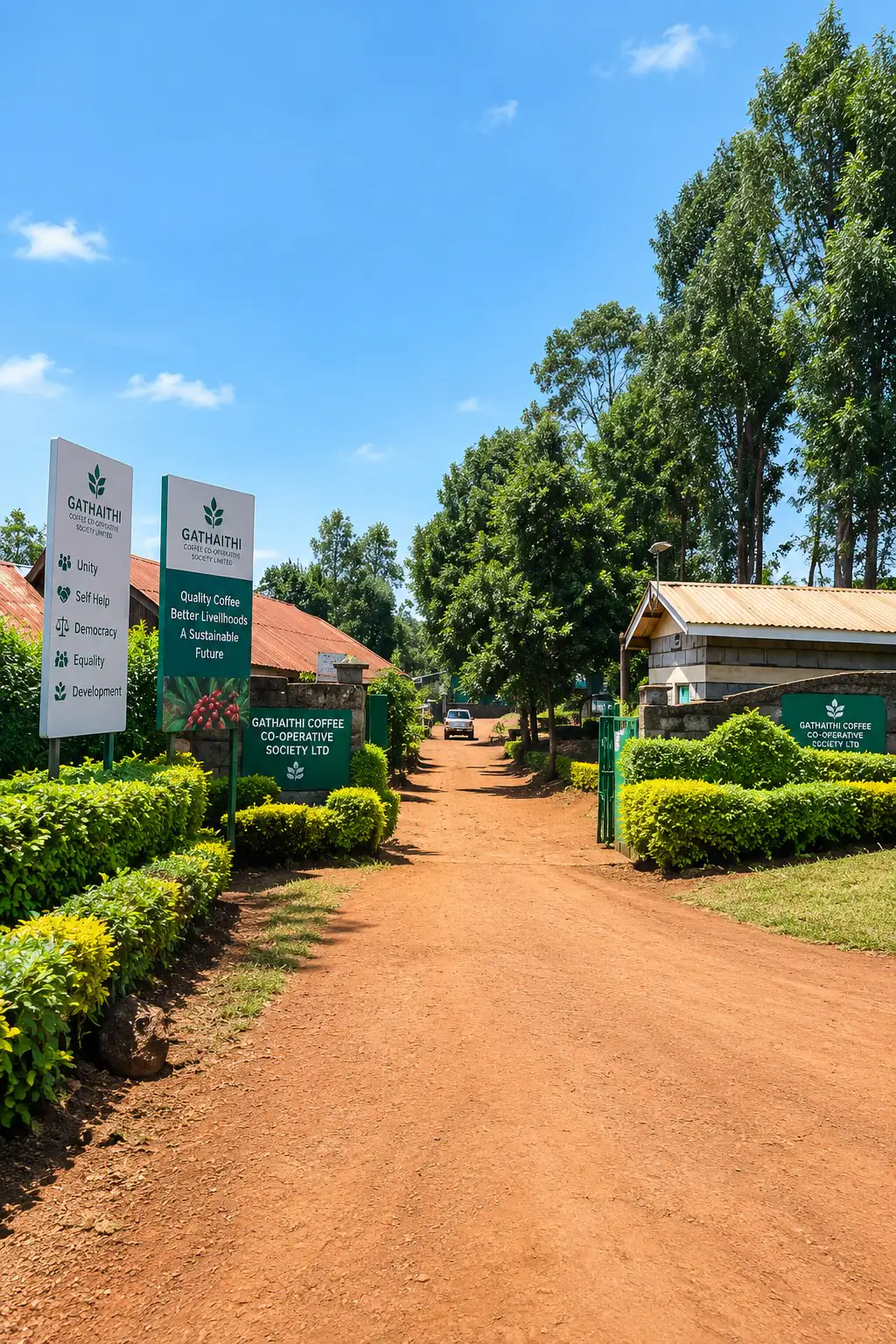
Welcome to Gathaithi Farmers’ Co-operative Society. Our main entrance stands as a testament to collective ownership, displaying the core values that drive our 1,988 members: unity, self-help, democracy, equality, and continuous development. Guided by our founding motto—Quality Coffee, Better Livelihoods, a Sustainable Future—this gateway marks the start of every harvest journey from farm to market.
Stop 02
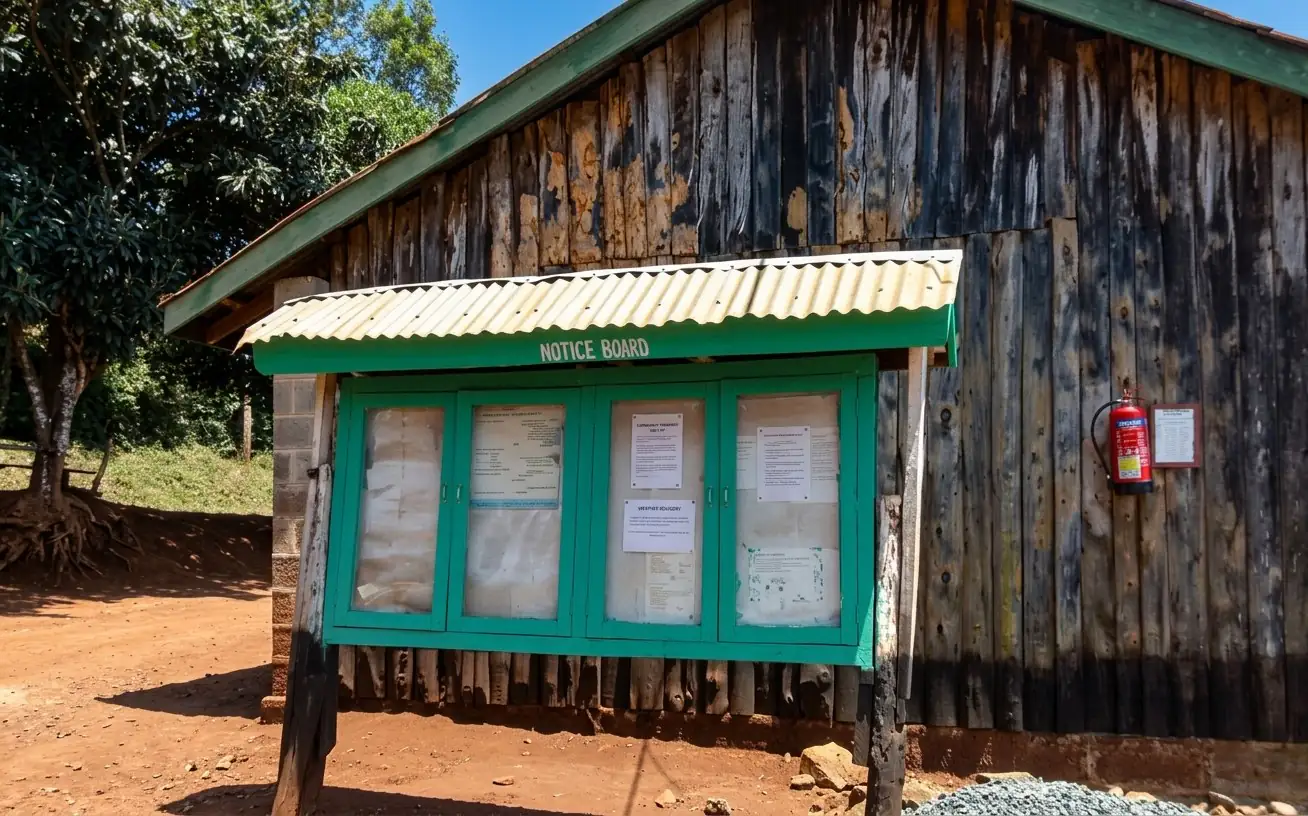
The notice board
The members’ notice board at the mill. Cherry payment dates, meeting notices and society announcements are posted here, behind glass, for every member to read.
Stop 03
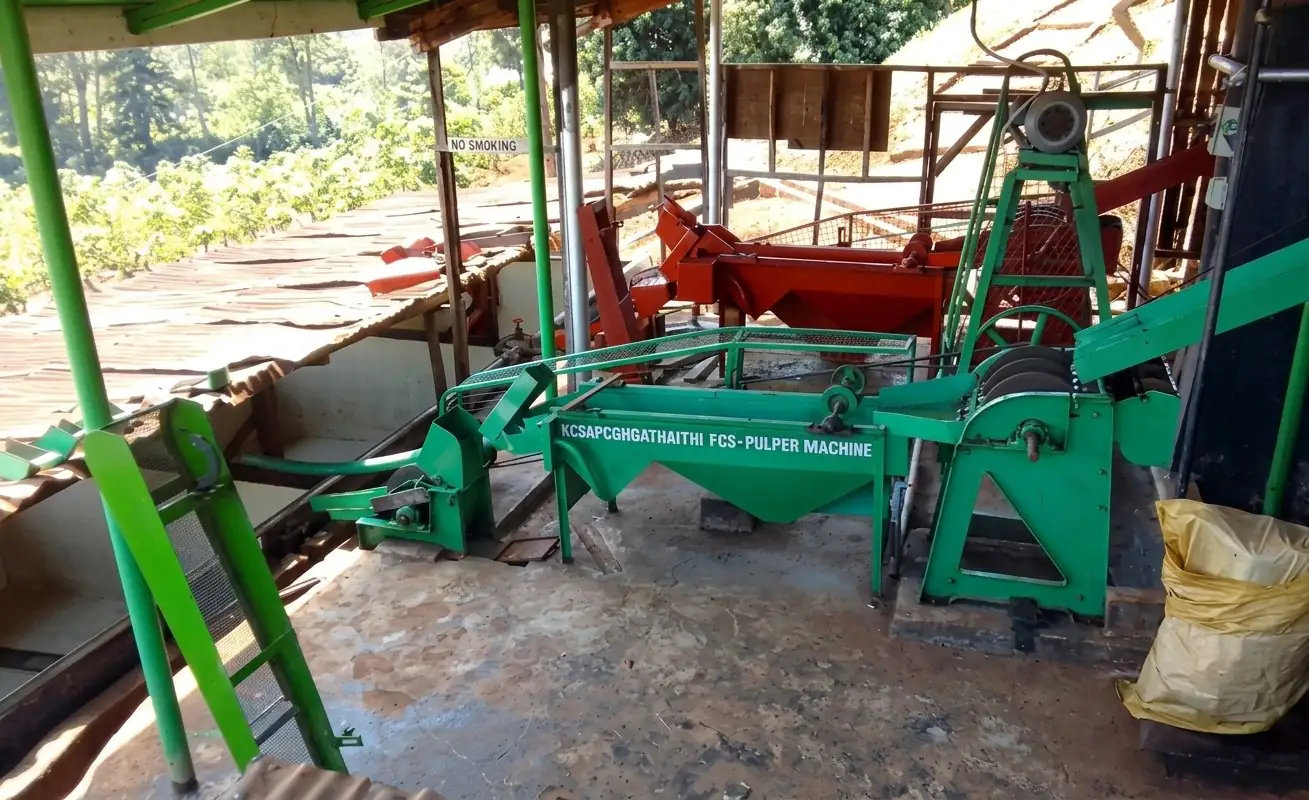
The pulper
The pulping machine is the first stage of wet processing. It removes the skin and pulp from freshly delivered cherry, releasing the beans in their parchment layer on the evening of delivery.
Stop 04
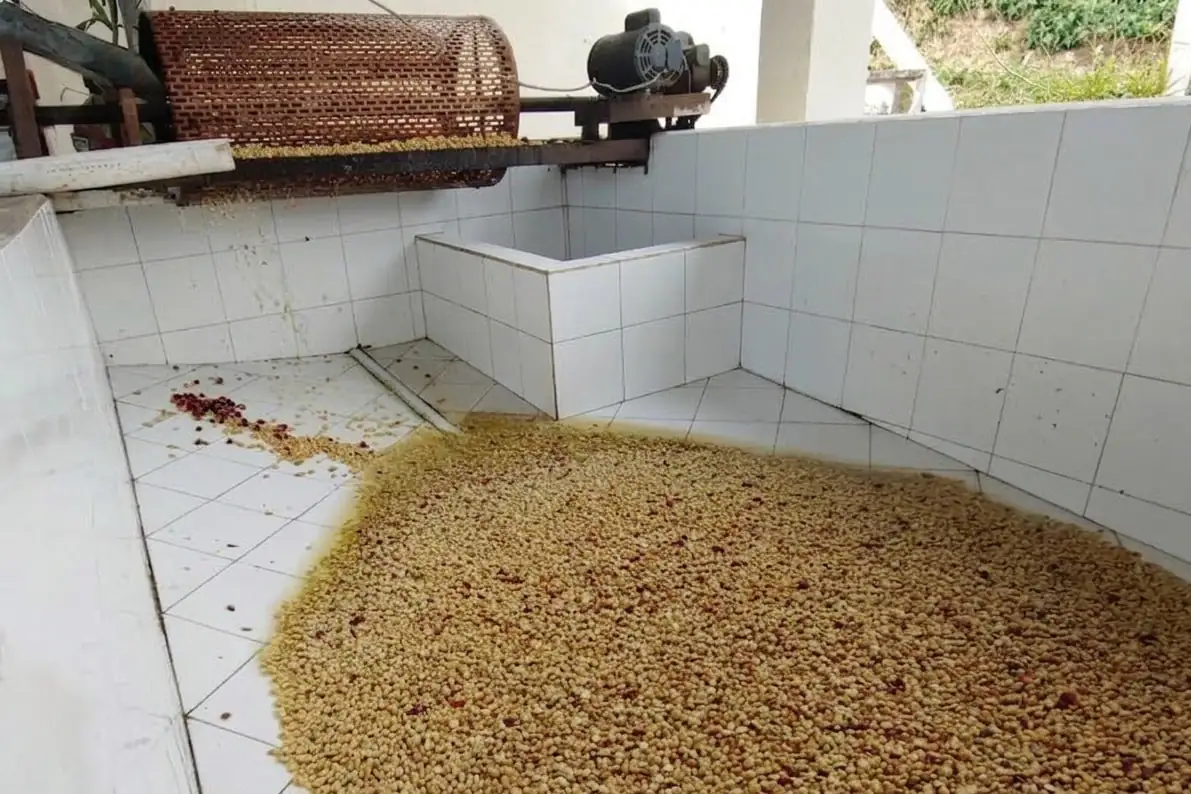
The washing tank
After pulping, the parchment passes over a rotating drum screen into this tiled tank, where it is washed in clean water to remove the remaining fruit.
Stop 05
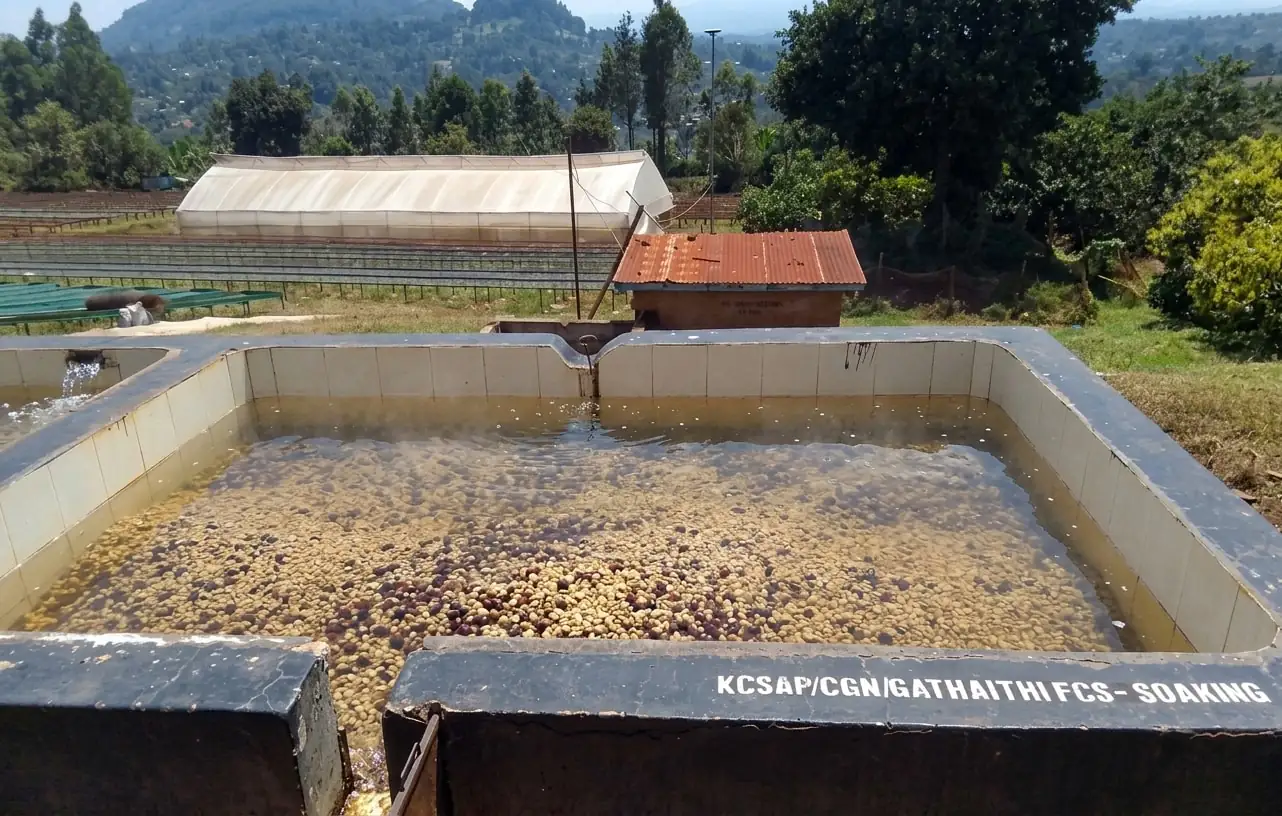
The soaking tank
The washed parchment is soaked under clean water before drying. This soak, a hallmark of Kenyan washed coffee, gives the cup its clean, bright character.
Stop 06
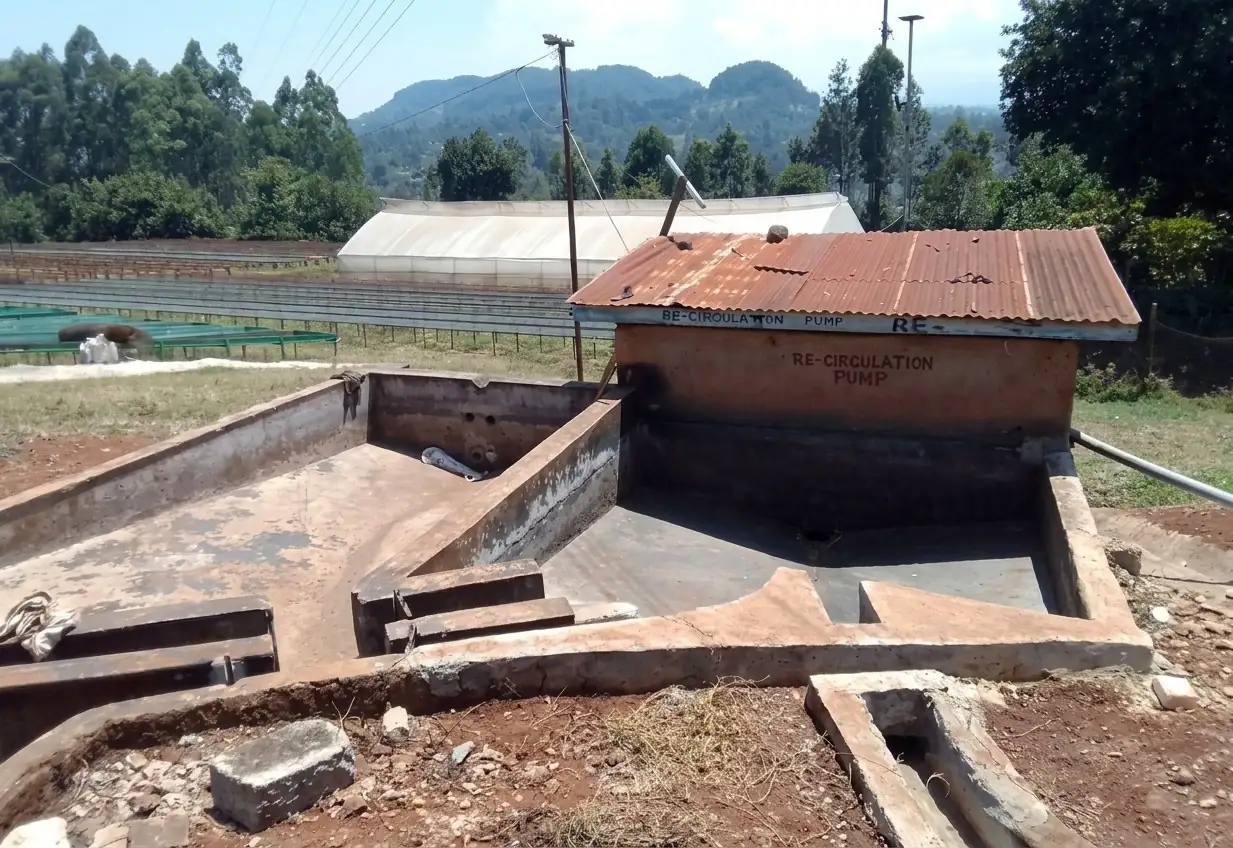
The re-circulation pump
The pump house returns water from the washing channels back into the system, reducing the amount of fresh water the mill draws during processing.
Stop 07
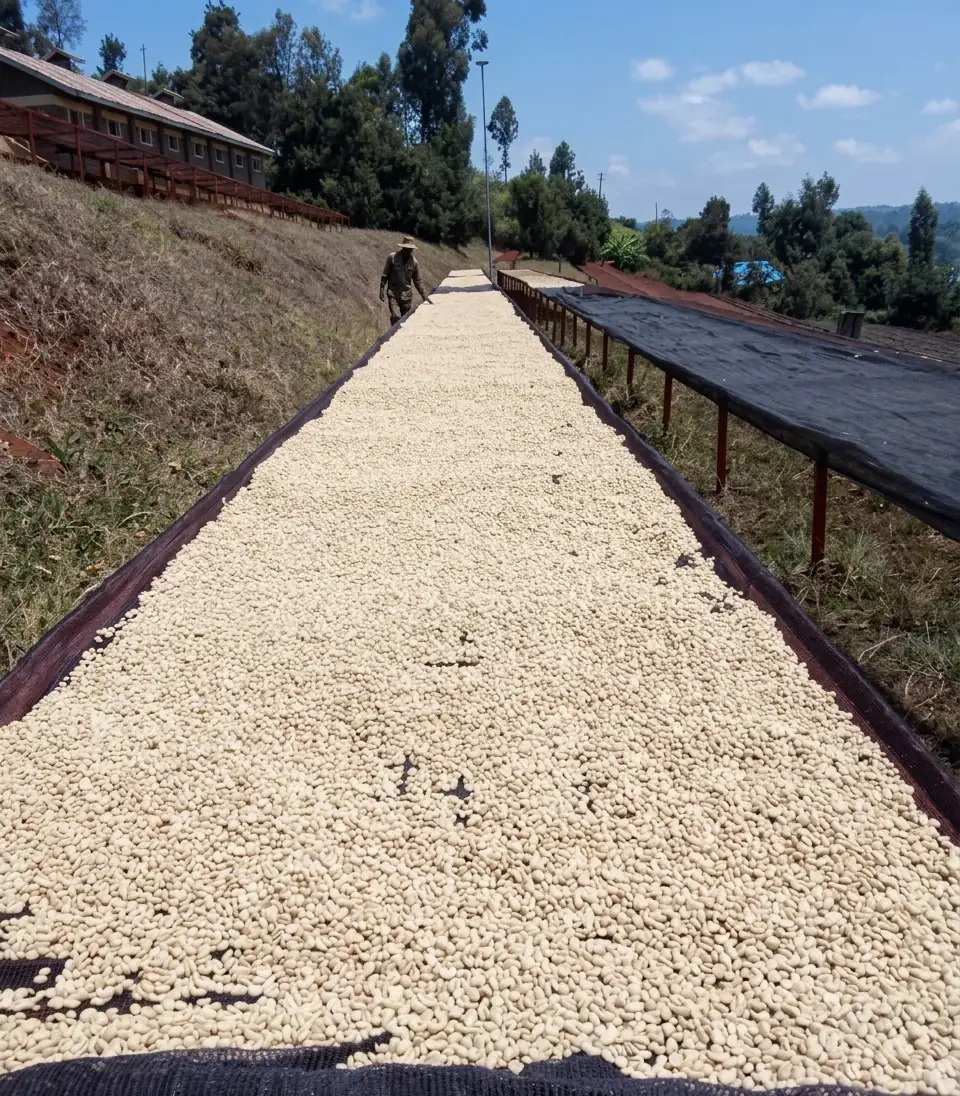
The drying beds
Parchment is spread in a thin layer along the raised drying beds and turned by hand throughout the day, so that it dries slowly and evenly in the sun.
Stop 08
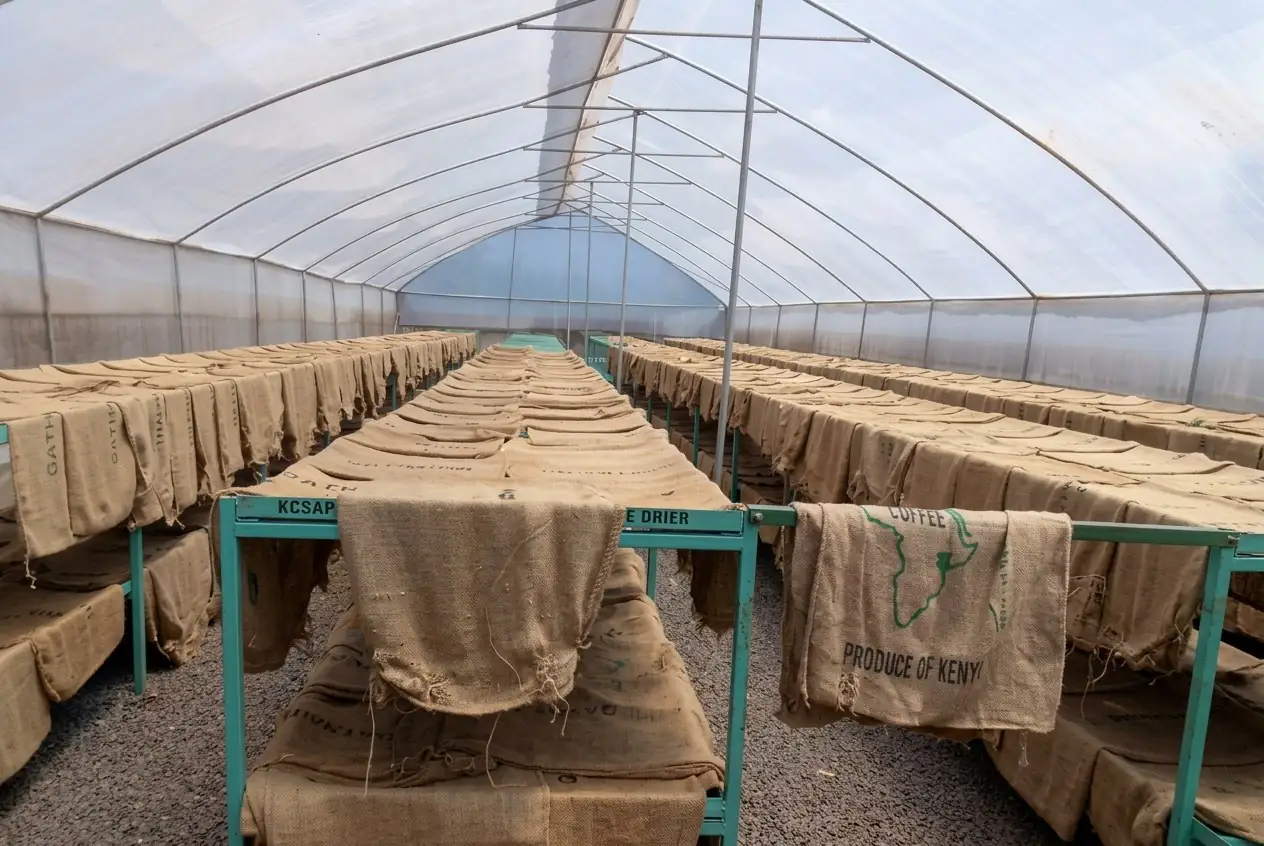
Hygiene & Moisture Control
A dedicated, covered structure designed to dry and aerate jute sacks off the ground. By keeping sacks raised away from soil and moisture, this facility prevents dirt contamination and mold risk, ensuring the parchment remains clean, dry, and protected from unexpected rainfall during peak harvest.
Stop 09
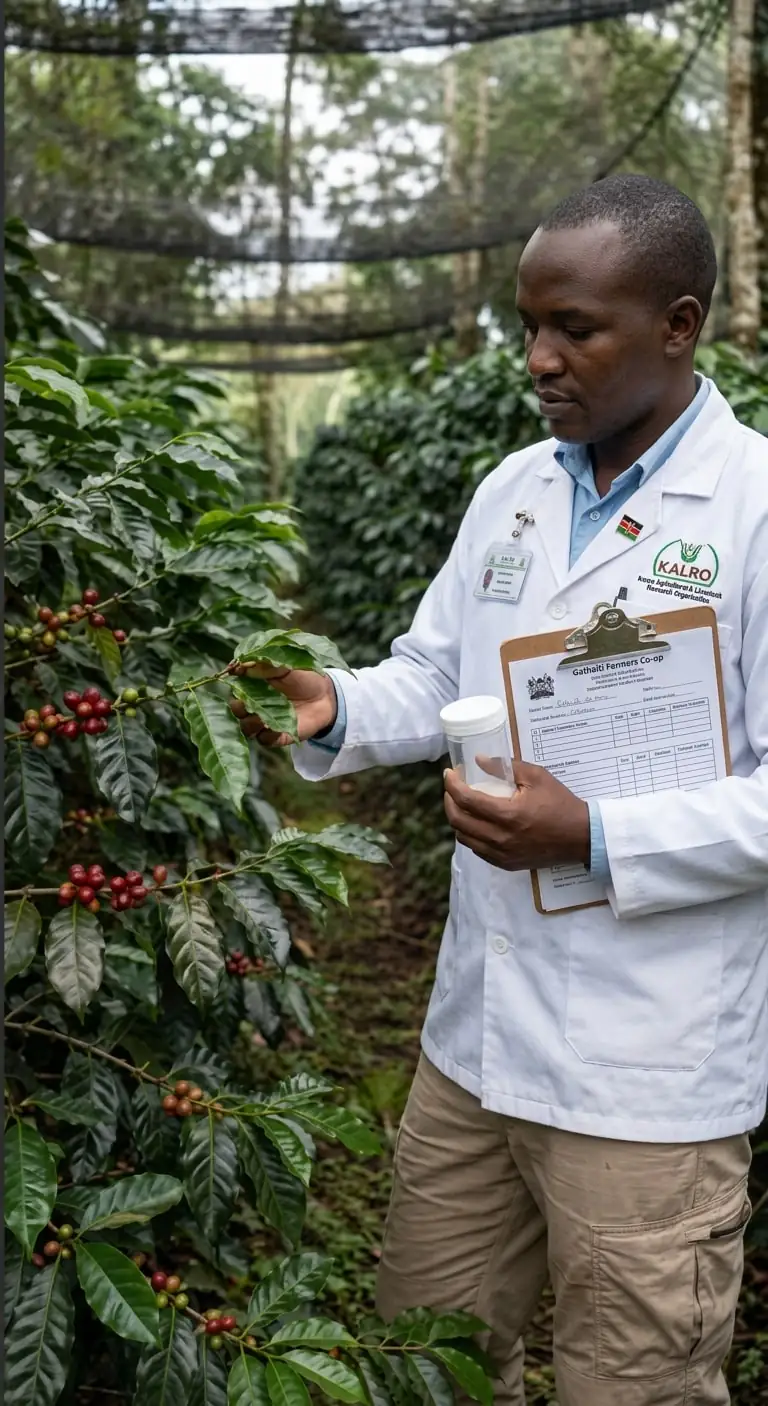
A member’s farm
Field support on a member’s farm: an agronomist inspects the coffee trees and records observations for the farmer.
Stop 10
The people
The management and supervisory committees, elected by our members to run and oversee the society.
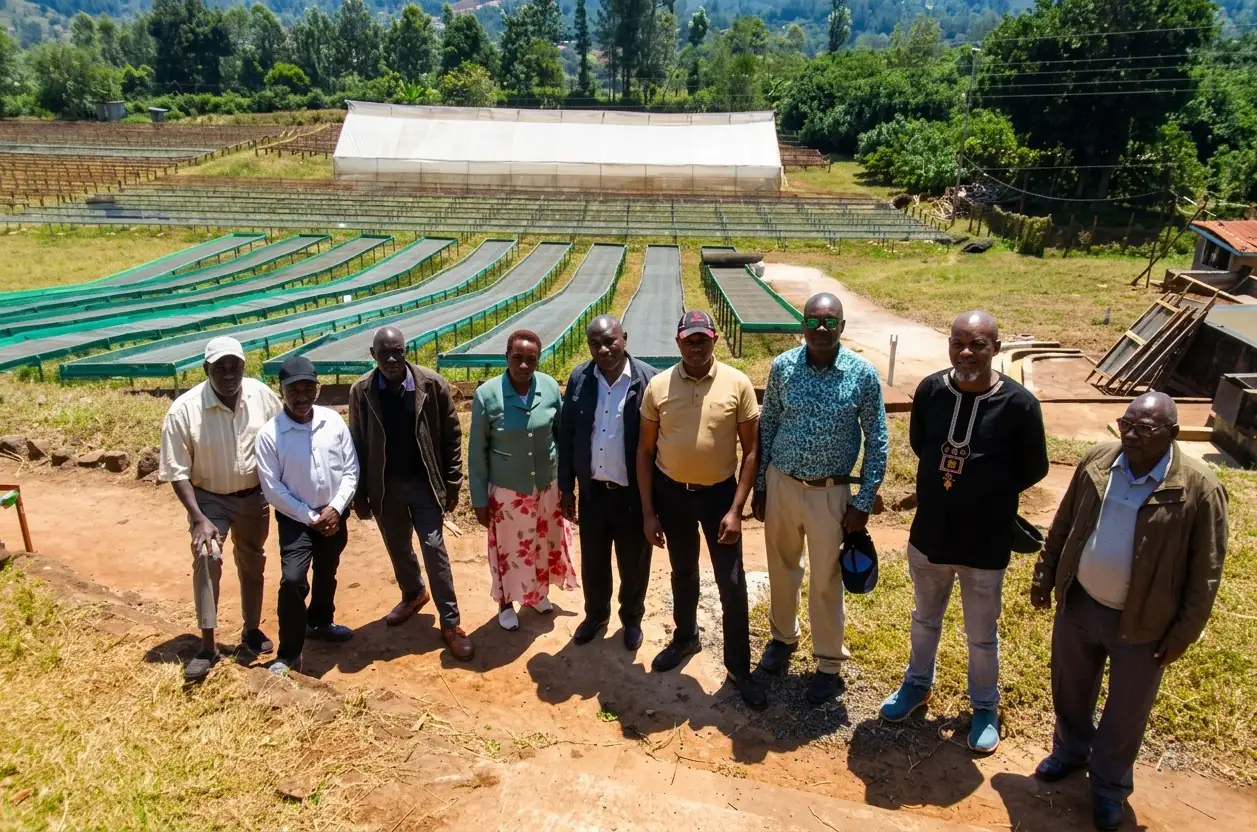
The committeesThe management and supervisory committees at the drying ground.
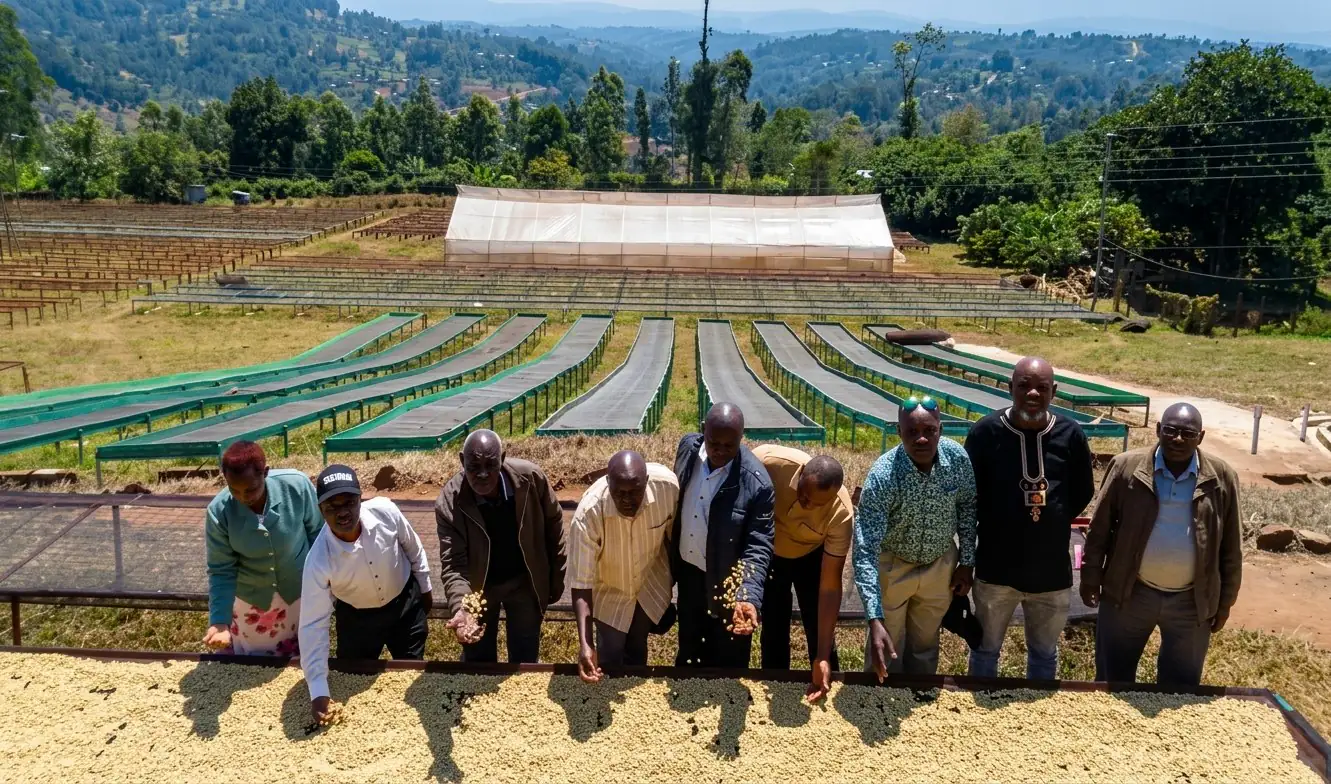
Checking the parchmentCommittee members at a drying bed, checking the parchment by hand.